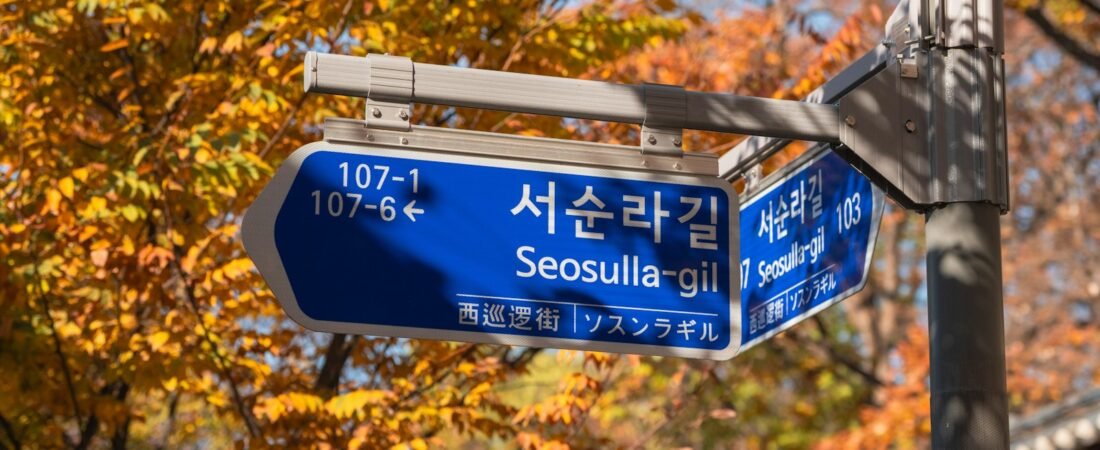
Photo by HYEWON HWANG on Unsplash
A Korean address can arrive in two completely different forms for the same building. One names a road and a number. The other names a neighborhood and a lot number that seems to have nothing to do with where the door is. Foreigners filling in forms, ordering deliveries or reading a landlord’s message run into both, often on the same day.
The questions below are the ones that come up again and again in English-language guides to Korean addresses. I have answered them from the government’s own lookup service, contemporary reporting and the published numbering rules rather than from the guides themselves.
Why does Korea have two address systems?
Because it replaced one with the other and the old one never fully went away. The older land-lot system, called jibeon, was adopted under Japanese rule, which lasted from 1910 to 1945, and was based directly on the Japanese addressing system. It numbers plots of land, not buildings on streets.
The road name system was rolled out in 2011 and became the official standard on January 1, 2014. The Korea Herald reported at the time that most people still preferred the familiar old addresses, and that the street-based system had been used on only 16.55% of mail as of September 2012. Mail with old addresses kept being delivered, so nobody was forced to switch.
Which Korean address should I use?
The road name address, whenever you have a choice. It is the official one, government forms expect it, and every major map and delivery app understands it. Keep the lot-number version too if a landlord or an older document uses it, because you may need to match the two up later.
| Road name address | Land-lot address (jibeon) | |
|---|---|---|
| Identifies | A building on a named road | A registered plot of land in a neighborhood |
| Looks like | Road name + building number | Neighborhood (dong) + lot number |
| Status | Official since 2014 | Still used in land records and by habit |
How do I write a Korean address in English?
Reverse the Korean order. In Korean the address starts with the province or city and ends with the building and unit. In English it starts with the recipient and ends with the city, the way Western addresses do. A typical English road name address looks like this:
Unit or apartment number, building number and road name, district (gu), city, then the five-digit postal code. The address here is a made-up example to show the order.
The part foreigners most often get wrong is the road name. Copy it exactly, including the number and suffix in names like “10-gil”. That piece tells the courier which small side street to look for, and dropping it can send a parcel to the main road.
What do daero, ro and gil mean?
They describe the size of the road. According to the descriptions in the Wikipedia overview of Korean addresses, a daero is a boulevard of eight or more lanes, a ro has two to seven lanes, and a gil is anything smaller. A name like “Hangang-daero 10-gil” means the tenth small street branching off Hangang-daero.
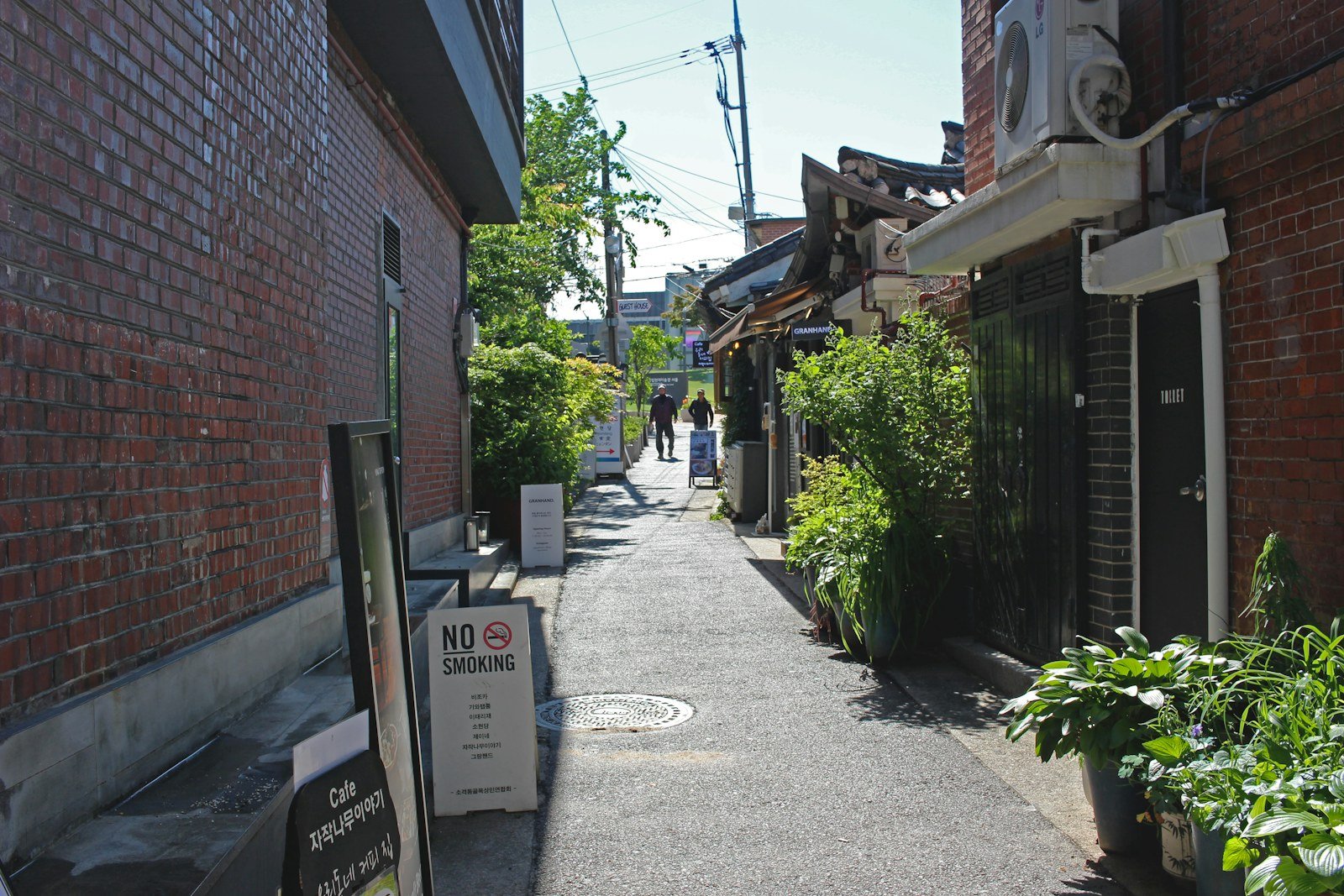
Photo by J Shim on Unsplash
Do the building numbers mean anything?
Yes, and this is the most useful thing to know about the new system. Building numbers go up by 2 every 20 meters along a road, with odd numbers on the left side and even numbers on the right as you travel from the start of the road.
That means a building number roughly doubles as a distance. Number 110 sits about 1.1 kilometers from where its road begins. Seoul City Hall’s address is 110 Sejong-daero, so the rule puts it a little over a kilometer up Sejong-daero from that road’s starting point. If you are standing at number 40 looking for number 60, you know it is about 200 meters further on the same side.
The old lot numbers carry no such meaning. They followed the order in which plots were registered and split, so lot 123 and lot 124 can be nowhere near each other. That is the main reason the switch happened.
How do I convert an old address to the new one?
Use the official lookup at juso.go.kr, run by the Korean government. Searching either form of an address returns both, along with the postal code. Korean map apps such as Naver Map and Kakao Map can generally search by either form too, which is often quicker on a phone.
Photo by Greg Willson on Unsplash
Why does my old Korean address have a six-digit postal code?
Because it predates August 1, 2015, when Korea replaced six-digit postal codes with five-digit ones tied to new basic district areas. If you see six digits, the code is out of date. Look the address up again to get the current five-digit code.
Will a Korean website accept an address I type in English?
Often not. Many Korean sites use an address search pop-up rather than free text, and some search only in Korean. Searching by the road name in Korean, or pasting the Korean version from a map app, usually works where English fails. This is the same pattern foreigners hit with Korean identity verification: systems built around Korean-language records first, with English support added unevenly.
Quick answers on Korean addresses
Is the old land-lot address still valid?
It still exists in land and property records, and mail using it was delivered after the 2014 switch. For forms and deliveries, the road name address is the safer choice.
What order does a Korean address use in Korean?
Largest to smallest: province or metropolitan city, district, road name and building number, then the unit. English reverses it.
How many digits is a Korean postal code?
Five, since August 1, 2015.
Where can I check an address officially?
The government’s road name address site, juso.go.kr, which shows the road name address, the matching land-lot address and the postal code.
Dates and the 2012 usage figure come from The Korea Herald’s report on the system’s full launch. The building-numbering rule and road categories are as described in Wikipedia’s overview of Korean addresses; the postal code change date is from Wikipedia’s article on Korean postal codes. The sample address is invented to illustrate the format.