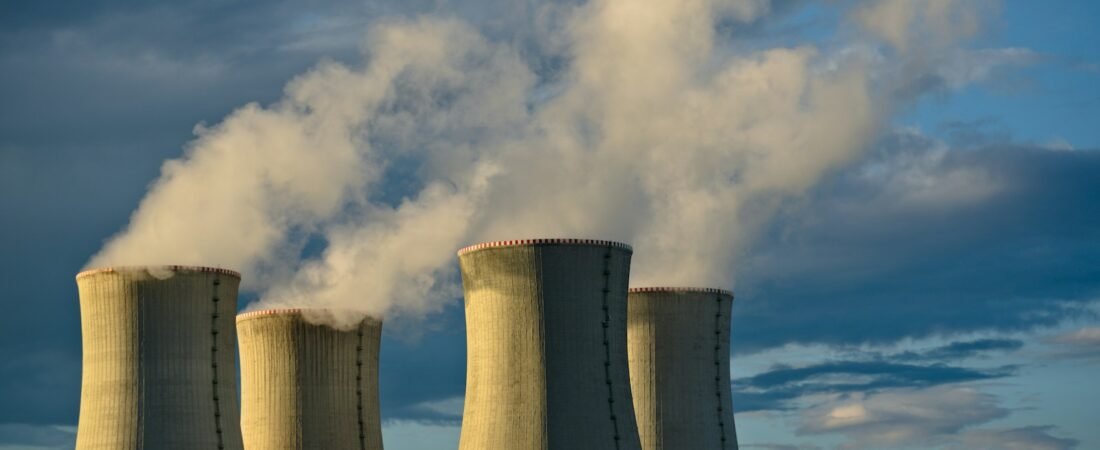
Photo by Lukáš Lehotský on Unsplash
On June 17, 2026, Korea Hydro & Nuclear Power picked Yeongdeok, a county on the country’s east coast, as the site for two new nuclear reactors. It is the first new nuclear plant site Korea has designated in 14 years. Busan’s Gijang district was named alongside it, as the country’s first site for a small modular reactor.
Read on its own, that is a domestic energy story. Read next to what has been happening in Kentucky, Pennsylvania, and Ireland over the same twelve months, it is the same story everywhere: AI data centers need more electricity than the grid they are plugged into was built to supply, and nuclear power is the answer utilities and governments keep landing on.
What Korea Actually Approved
The Yeongdeok site will host two large reactors totaling 2.8 gigawatts, with construction targeted to run from 2027 to 2038. Yeongdeok beat a rival bid from Ulju, in Ulsan, scoring 91.01 points against 82.63 in the site evaluation.
| Site | Reactor type | Capacity | Target completion |
|---|---|---|---|
| Yeongdeok (North Gyeongsang) | 2 large reactors | 2.8 GW | 2027–2038 |
| Gijang (Busan) | Korea’s first SMR | Not yet finalized | Not yet finalized |
The last time Korea designated a new nuclear site was 2012. Fourteen years is a long enough gap that reading this purely as routine energy planning misses the point. Something changed the calculation, and it did not change inside the electricity ministry.
The Number That Changed the Calculation
According to the International Energy Agency, global data center electricity consumption is projected to roughly double from about 485 terawatt-hours in 2025 to around 950 terawatt-hours by 2030. Electricity use from AI-focused facilities specifically surged 50 percent in 2025 alone, and AI-optimized servers, which already draw 31 percent of data center power, are expected to overtake conventional servers by 2027.
Nuclear plants run at close to full output around the clock, which is exactly the load profile an AI data center wants and a wind or solar farm cannot promise on its own. That is the specific reason nuclear, rather than renewables generally, keeps coming up in these deals.
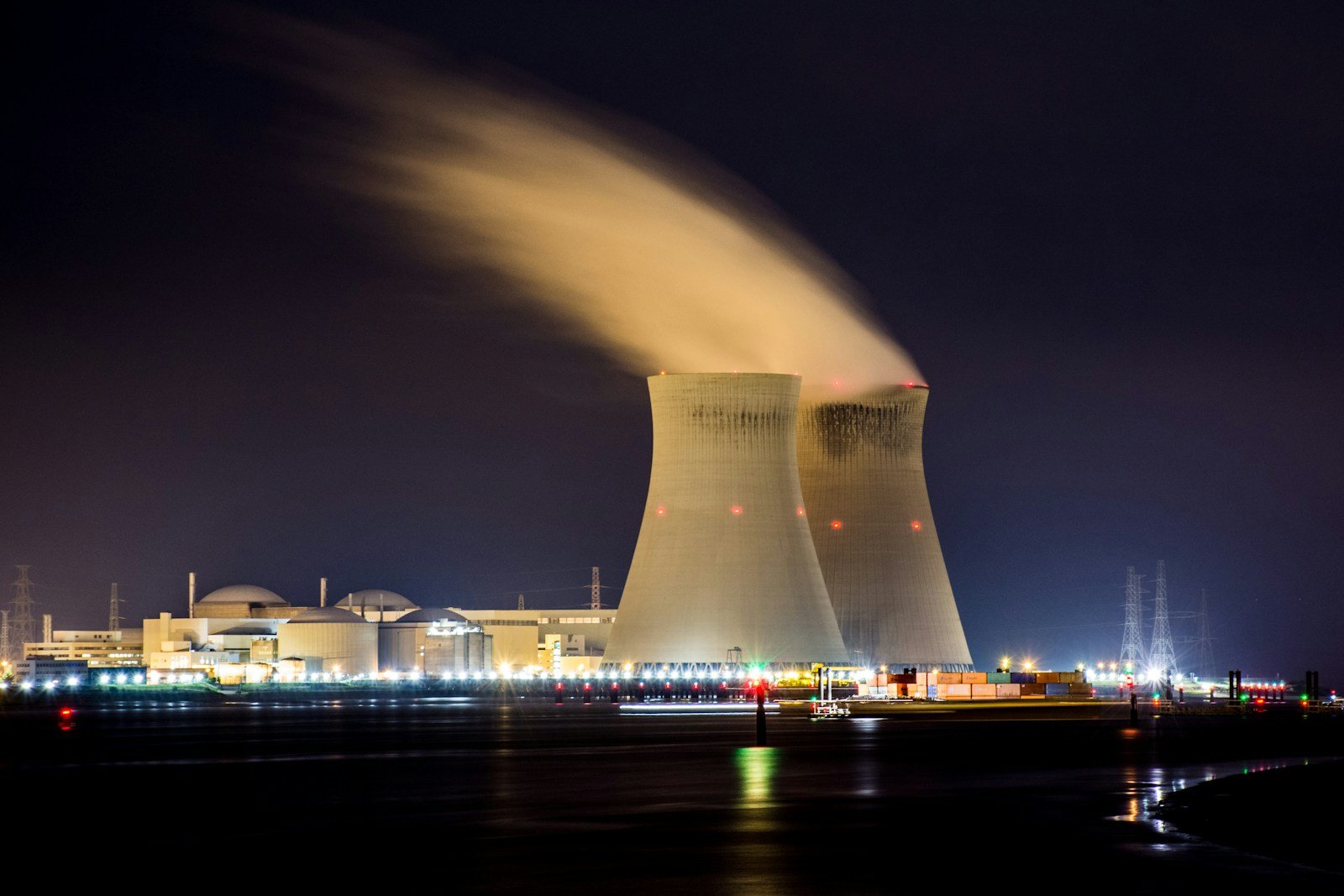
Photo by Nicolas HIPPERT on Unsplash
Korea Is One Data Point in a Pattern
Yeongdeok did not happen in isolation. The same underlying pressure has produced strikingly similar decisions on three continents inside a single year.
| Where | What happened |
|---|---|
| Pennsylvania, US | Microsoft contracted with Constellation Energy to restart the Three Mile Island plant, dedicating its output to an AI data center. |
| Kentucky, US | The Department of Energy is converting the former Paducah uranium enrichment site into a roughly $100 billion, 1.8-gigawatt AI data center campus, backed by 2 GW of new gas generation and 2.6 GW of battery storage. |
| Nationally, US | Meta agreed to buy output from eight Natrium reactors being developed by TerraPower, the Bill Gates-backed nuclear startup. |
| South Korea | KHNP designated Yeongdeok and Gijang as new reactor sites, its first new sites in 14 years. |
A nuclear plant running at full output around the clock is exactly the load profile an AI data center wants. That is the specific reason nuclear keeps coming up in these deals, not renewables in general.
Where Korea’s Chip Industry Fits In
Korea’s position here is not incidental. Samsung and SK Hynix already manufacture most of the high-bandwidth memory that AI accelerators depend on, which makes the country a chokepoint in the AI hardware supply chain before a single new watt of power is added. Securing enough electricity to keep that manufacturing base running, and to potentially host AI compute domestically, extends a position Korea already holds rather than starting one from nothing.
That overlap, a country that both builds the chips and now wants to build the power for the systems that use them, is not something most coverage of the Yeongdeok decision has connected.

Photo by Winston Chen on Unsplash
What This Does Not Fix, and When
None of this changes anything soon. Yeongdeok’s nuclear reactors are not due until 2027 at the earliest, running to 2038 for the full build-out. Paducah’s data center campus targets 2031. Every one of these projects is a bet on demand a decade out, not a fix for the power constraints AI companies are hitting this year.
In the meantime, the tighter near-term supply is exactly why deals like the Three Mile Island restart, which reroutes existing capacity rather than building new, keep happening alongside the slower new-build projects. The two are not competing strategies; they are the fast and slow halves of the same response.
FAQ: Frequently Asked Questions
What did Korea just decide about new nuclear reactors?
On June 17, 2026, Korea Hydro & Nuclear Power selected Yeongdeok for two new nuclear reactors (2.8 GW combined) and Gijang, in Busan, for the country’s first small modular reactor. It is Korea’s first new nuclear site designation in 14 years.
Why is AI driving demand for nuclear power?
The IEA projects global data center electricity use will roughly double by 2030, with AI-focused facilities as the fastest-growing share. Nuclear plants supply steady, round-the-clock output, which matches how AI data centers need to run far better than intermittent sources do on their own.
When will Korea’s new reactors be running?
The Yeongdeok reactors are targeted for construction between 2027 and 2038. The Gijang small modular reactor’s timeline has not yet been finalized.
Is Korea the only country doing this?
No. Similar moves in the past year include the U.S. Department of Energy’s roughly $100 billion AI data center project at the former Paducah uranium plant, Microsoft’s deal to restart Three Mile Island, and Meta’s agreement to buy power from eight TerraPower reactors.
Figures are drawn from the International Energy Agency’s data center and AI energy reporting, Korea Hydro & Nuclear Power’s site announcement as covered by Korean outlets including Etoday and Electronic Times, and U.S. wire reporting on the Paducah project. Site timelines and capacity figures can change as projects proceed; check the linked sources directly before citing specific numbers.