Photo by Sean Do on Unsplash
“In South Korea, kids aren’t allowed to play video games after midnight.” You will still find that sentence in articles, forum threads and the occasional conference talk about gaming regulation. It was true for ten years. It stopped being true at midnight on December 31, 2021, when the Korea shutdown law ended.
The law is worth getting right, not only because the claim is out of date. Even while it was in force, it did less than its reputation suggests, and the reasons it failed say a lot about how Korea regulates technology.
The claim, and the correction
| What is often said | What the record shows |
|---|---|
| Korea bans children from gaming at night | The ban ended at midnight on December 31, 2021 |
| It covered all video games | It covered online PC games. Mobile games were outside it |
| It stopped kids playing late | Minors got around it with overseas accounts and their parents’ identity details |
| Korea dropped game time limits entirely | A voluntary “choice system” replaced it, where minors and parents set hours |
What the shutdown law actually did
The law was a revision to Korea’s Youth Protection Act, passed on May 19, 2011 and in force from November 20, 2011, according to its Wikipedia entry. It blocked anyone under 16 from online games between midnight and 6 a.m. Game companies had to check ages and cut players off at midnight.
It survived a legal challenge. In April 2014 the Constitutional Court upheld it, accepting the argument that game addiction harmed young people’s health and that the state could step in. For a while it looked like a permanent part of Korean internet life.
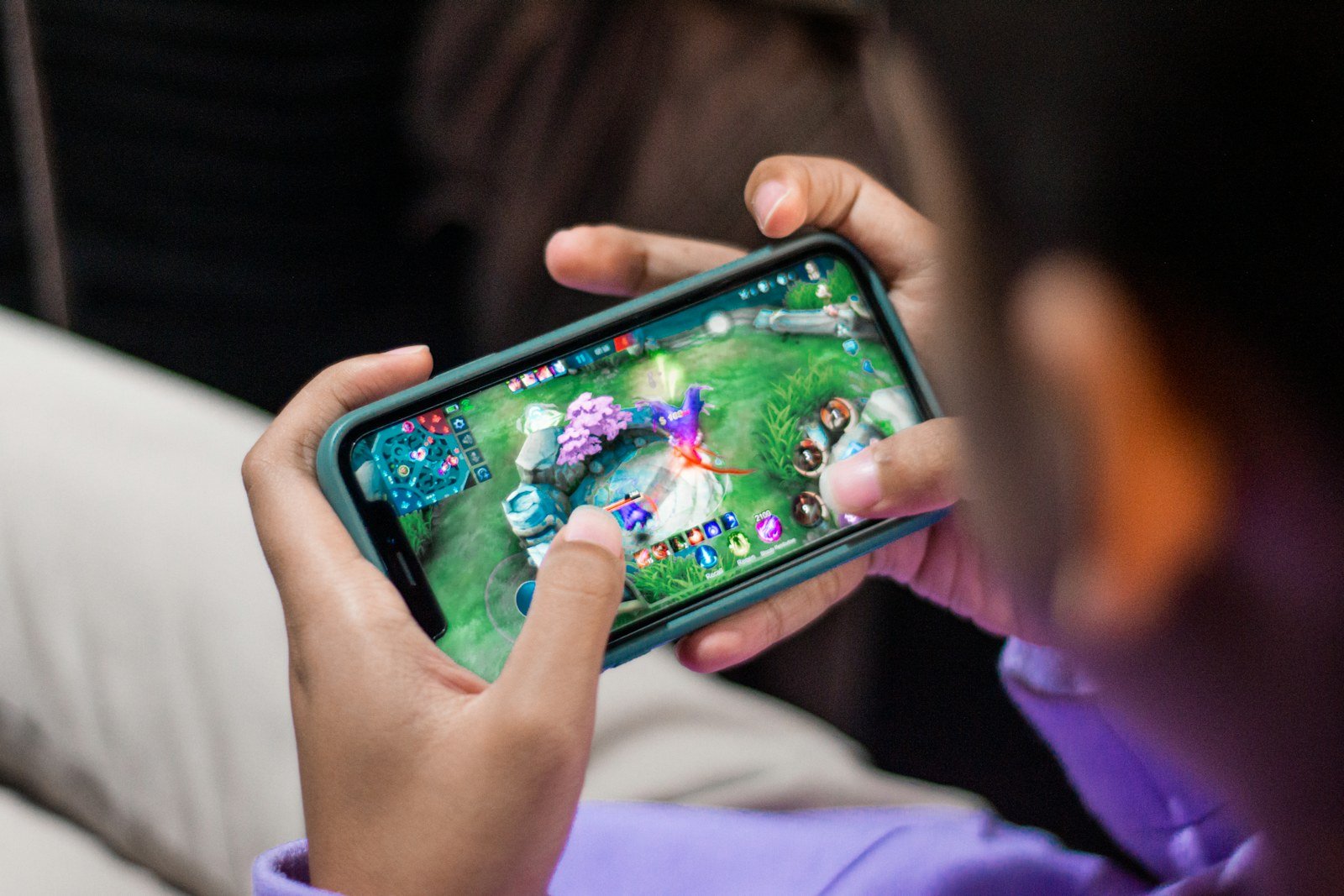
Photo by Pandhuya Niking on Unsplash
Why it did less than people think
The biggest gap was scope. The law was written for online PC games at a time when that was where Korean teenagers played. By 2018, mobile games made up 54% of Korea’s game market against 41% for PC, according to Korea Creative Content Agency figures cited by The Korea Herald. A ban on the smaller part of the market was never going to change much about late-night play.
The second gap was enforcement. The Herald reported that minors simply used overseas accounts or their parents’ identification. Wikipedia’s account goes further, describing children taking resident registration numbers to get past age checks.
Did it work? The data says barely
There is a direct measurement. A study in the Journal of Adolescent Health used the Korea Youth Risk Behavior Web-based Survey from 2011 to 2015, compared teenagers aged 15 and under (who were covered) with those aged 16 and over (who were not), and tracked the difference over time. The sample was large: more than 140,000 responses in the younger group and over 100,000 in the older one.
| Year | Change in daily internet use for covered teens | Statistically significant? |
|---|---|---|
| 2012 | 3.6 minutes less | Yes |
| 2013 | 3.2 minutes less | Yes |
| 2014 | 1.1 minutes less | No |
| 2015 | 2.2 minutes more | No |
A few minutes a day at best, fading to nothing within four years. The authors also found the policy did not change internet addiction or sleeping hours, which were the two things it was supposed to fix, and concluded that its effects were practically insignificant. Across the four years the study covered, a nationally enforced curfew bought roughly three minutes a day, and only in the first two.
How it ended
In August 2021, the Ministry of Culture, Sports and Tourism and the Ministry of Gender Equality and Family announced they would abolish the law. The National Assembly passed the revision in November, and the curfew lifted at the turn of the year.
Gender Equality and Family Minister Kim Kyung-sun said the new approach “respects teenagers’ right to self-determination as well as families’ right to education,” as quoted by The Korea Herald.
Photo by Resul Kaya on Unsplash
What replaced it
The replacement is a “choice system” under Korea’s Game Industry Act. Players under 18, or their parents, can choose specific hours when gaming is allowed. Nothing is blocked by default. The real change is who decides: the family now, instead of the state.
Part of why the old claim keeps circulating is timing. China announced much stricter limits on minors’ online gaming in the same year, and the two countries are easy to blur in a headline. If you read that an East Asian government restricts children’s gaming hours today, check which country it is.
What the episode says about Korean tech regulation
Korea tends to regulate early and concretely. The shutdown law named an age, an hour and a type of game, and it held up in court. Then the market moved to phones, the enforcement mechanism leaked, and the rule stayed on the books for years after it stopped matching how people played.
I see the same pattern in other Korean tech rules I have written about here, such as the 28GHz 5G licences that set precise build targets nobody met. A precise rule gets built for one moment and is later overtaken by how people actually use the technology. The lesson I take from it is to write a review date into rules like this from the start.
Other questions about the shutdown law
Is the Korea shutdown law still in effect?
No. It ended at midnight on December 31, 2021, after the National Assembly passed a revision in November 2021.
What age did the shutdown law apply to?
Under 16. It blocked online games for that group between midnight and 6 a.m.
Can Korean minors play games at night now?
There is no blanket ban. Under the choice system, players under 18 or their parents can set permitted hours for a game, so limits depend on the family.
Why was it called the Cinderella law?
Because the cutoff came at midnight, like the deadline in the fairy tale.
Dates, the 2018 market figures and the minister’s quote come from The Korea Herald’s report on the law’s end. Effect sizes are from the published abstract of the Journal of Adolescent Health study; I have not read the full paper. The 2011 passage dates and the 2014 court ruling are from Wikipedia’s article on the law; the August 2021 announcement is from Kotaku’s report. I have not used the choice system myself.