
Photo by Jonas Leupe on Unsplash
Apple holds its “Surprise and Shine” event on September 9, 2026, and the headline act is expected to be its first foldable iPhone. Coverage of the event will mostly be about Apple. The more durable story, reported separately by Korean financial outlets in the days before the launch, is about who actually builds the thing: two Korean companies and their suppliers are behind nearly every core component, from the folding screen itself down to the memory chips inside it.
The specific colors and chip names announced on stage may or may not match the leaks below. The supply chain relationships will not change either way, since they come from component-industry financial reporting rather than from Apple’s keynote script.
What is Apple’s foldable iPhone expected to include?
A book-style foldable device, widely referred to in leaks as the iPhone Ultra: roughly a 5.5-inch outer OLED screen and a 7.8-inch inner OLED screen when unfolded, a liquid metal hinge, and a body reported to be as thin as 4.5mm unfolded. Reported pricing starts at $2,000, with higher-storage models potentially exceeding $2,500. None of this is Apple-confirmed as of publication; it is compiled from device leak coverage by MacRumors and Tom’s Guide.
Who actually makes the screen?

Photo by Michael Maasen on Unsplash
Samsung Display, according to Seoul Economic Daily’s reporting on industry estimates, is the exclusive supplier of both the 5.5-inch outer panel and the 7.8-inch inner panel. The panels are manufactured at Samsung Display’s Asan campus in South Korea, on production lines physically separated from the ones making Galaxy Z Fold displays. Estimated volume is equivalent to about 24 million conventional smartphone panels, and Apple is reportedly paying roughly 20 percent more per unit than Samsung pays itself for Galaxy foldable panels, reflecting the harder engineering problem of an ultra-thin folding glass and hinge structure built to someone else’s spec.
What about the cameras?
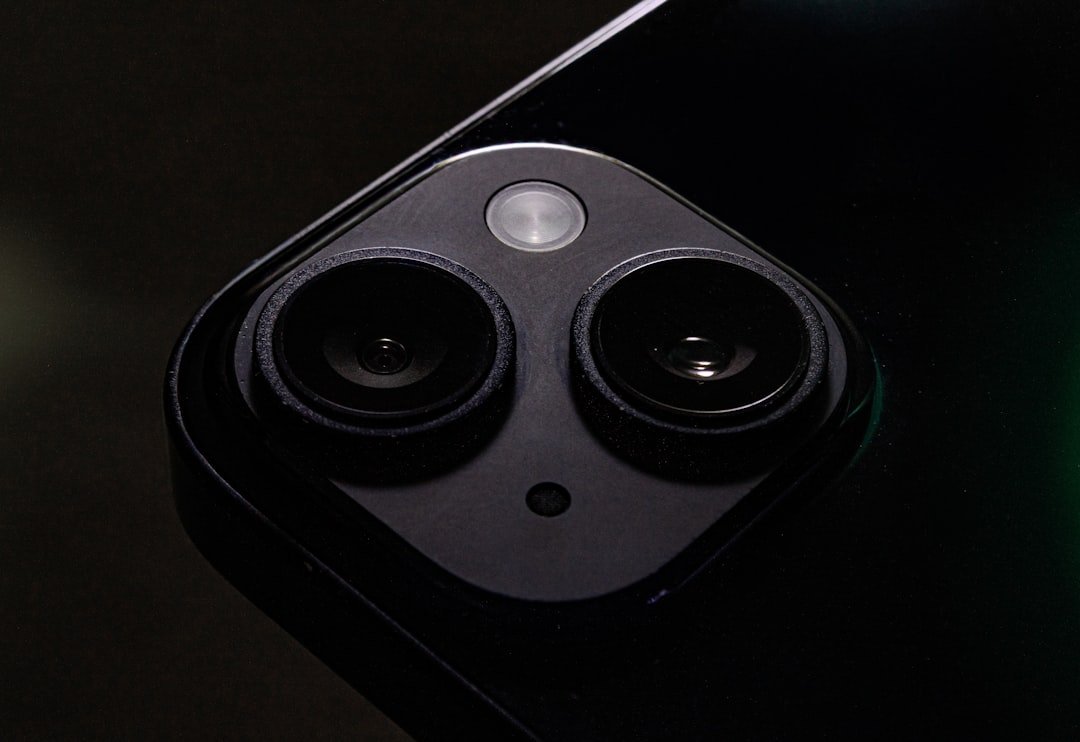
Photo by Andrew Ramirez on Unsplash
LG Innotek is reported to supply 55 to 60 percent of camera module volume across Apple’s new iPhone lineup, including the foldable model, alongside radio-frequency system-in-package units used for the phone’s communications chips. The foldable’s rear camera setup is expected to be two lenses, a 48-megapixel wide and an ultrawide, without a telephoto lens, a trade-off likely driven by the thinness of the folded body.
Where does the memory come from?
Samsung Electronics and SK hynix together are estimated to supply about 70 percent of the 12GB LPDDR5 DRAM expected in the new lineup, split roughly 37 percent Samsung and 33 percent SK hynix. For NAND flash storage, the two companies’ combined share is estimated at 45 percent, with SK hynix at 30 percent and Samsung at 15 percent. Samsung and SK Hynix’s memory dominance extends well beyond AI data centers into the phone in your pocket.
| Component | Korean supplier(s) | Estimated share |
|---|---|---|
| Foldable OLED panels | Samsung Display | Exclusive (reported) |
| Camera modules (lineup-wide) | LG Innotek | 55-60% |
| LPDDR5 DRAM | Samsung + SK hynix | ~70% combined |
| NAND flash | Samsung + SK hynix | ~45% combined |
| Substrates & MLCCs | Samsung Electro-Mechanics | Named supplier |
Does this actually move the needle for Samsung and LG?
By the estimates behind these reports, yes, measurably. Samsung Display’s overall revenue is projected at 32.5 trillion won, up 8.7 percent year over year, with the Apple foldable contract cited as a contributing factor. LG Innotek’s optical solutions division, which houses its camera module business, is projected at 21.544 trillion won, up 17.6 percent. Apple’s most Apple-branded product of the year is, by revenue, a meaningful Samsung and LG product too.
Why does a foldable iPhone cost so much more to build?
The 20 percent premium Samsung Display is reportedly charging over its own Galaxy foldable panel price is the clearest single number here. A foldable screen has to survive hundreds of thousands of fold cycles without a visible crease, using glass thin enough to bend and a hinge precise enough not to leave a gap. Apple specifying its own version of that problem, on top of Samsung’s existing one, is reportedly what the premium is paying for.
Is any of this confirmed by Apple or Samsung directly?
No. Apple does not comment on its suppliers before launch, and Samsung Display and LG Innotek do not typically confirm customer-specific contracts either, for competitive reasons. Every figure in this piece traces back to analyst estimates and Korean financial press reporting on those estimates, not to an on-record statement from any of the four companies named.
What’s the takeaway if you don’t care about foldable phones specifically?
Apple’s product decisions get covered as Apple news everywhere. The part that rarely gets explained outside Korean-language coverage is how much of that product, this year and most years, is built by a small handful of Korean component makers who supply Apple, Samsung, and each other’s competitors simultaneously. The device on stage on September 9 changes. The list of companies who actually get paid to build it barely does.
Figures in this piece are drawn from Seoul Economic Daily’s reporting on industry and analyst estimates (published September 6, 2026), MacRumors’ and Tom’s Guide’s pre-event leak coverage, and Korea Times’ event announcement coverage. Specifications and pricing may differ from Apple’s actual announcement; supply chain estimates may be revised as final production figures become available.