
Photo by Kabiur Rahman Riyad on Unsplash
South Korea launched the world’s first commercial 5G service in April 2019, and for a while it was the model every other country studied. Part of the plan was a second, much faster layer of 5G on the 28GHz band, the millimeter-wave spectrum that marketing materials promised would deliver gigabit speeds to phones. The Korea 28GHz 5G rollout never happened. By 2024 the government had taken the spectrum back from all three carriers, auctioned it to a newcomer, and then taken it back again.
The story gets far less attention outside Korea than it deserves. Several countries made the same bet on millimeter wave, and Korea is where the bet was measured and publicly called off.
What was promised
In June 2018, Korea auctioned two sets of 5G spectrum. The mid-band 3.5GHz frequencies became the 5G network Koreans use every day. The 28GHz band was the ambitious part. Each of the three carriers, SK Telecom, KT and LG Uplus, took a block of it, and the licences came with a condition: each carrier had to install 15,000 base stations for the band.
Millimeter wave is fast but fragile. The signal carries a huge amount of data over a short distance and is easily blocked by walls, glass and even a hand around a phone. To cover a city, you need many small sites close together. That is why the build obligation was so large, and why it was never going to be cheap.
What was actually built
Very little. When the Ministry of Science and ICT reviewed the carriers in November 2022, Light Reading reported that they had reached only about 10% of their 28GHz target. The ministry scored each carrier against a 30-point pass mark:
| Carrier | 2022 review score (pass: 30) | Outcome |
|---|---|---|
| SK Telecom | 30.5 | Licence shortened, then cancelled on May 15, 2023 with about 1,650 base stations built |
| LG Uplus | 28.9 | Licence cancelled, January 2023 |
| KT | 27.3 | Licence cancelled, January 2023 |
SK Telecom scraped past the review by half a point and got a reprieve: a shorter licence and a deadline to reach 15,000 base stations by the end of May 2023. It did not come close. RCR Wireless reported about 1,650 installed when the ministry cancelled its licence.
The ministry was blunt about why. Vice Minister Park Yun-kyu said the carriers’ efforts to save investment cost had “a major effect” on the result.

Photo by Red Shuheart on Unsplash
The second attempt: Stage X
The government did not give up on the band. It offered 28GHz to a brand-new fourth carrier instead, with a smaller build obligation and incentives the incumbents had never been given. In January 2024 Stage X, a consortium built around the budget mobile operator Stage Five, won the auction with a bid of 430.1 billion won.
Then the money did not arrive. Stage X was supposed to pay in 205 billion won of capital by May 2024. According to The Korea Herald, it did not, and its shareholder structure no longer matched its application. Second Vice Minister Kang Do-hyun said the ministry had concluded that Stage X’s capital raising “could not be trusted.” The cancellation was finalized on July 31, 2024.
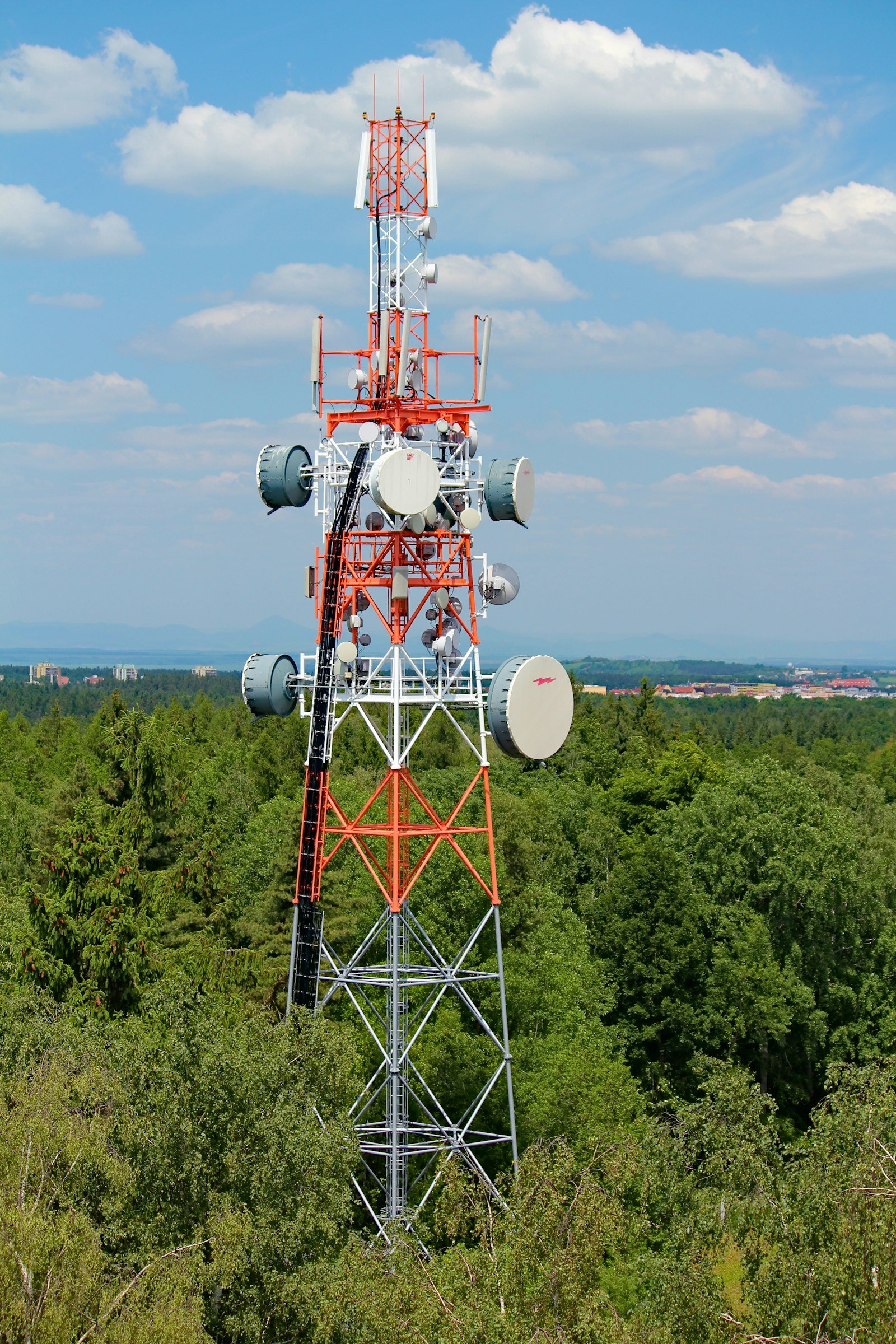
Photo by Dušan veverkolog on Unsplash
Lessons from Korea’s 28GHz 5G
1. A build obligation cannot create demand. The licences told carriers how many base stations to install. They could not make phone users need gigabit speeds in the few places millimeter wave reaches. Mid-band 5G already felt fast, so there was little to sell.
2. Physics sets the cost, and the cost sets the rollout. A technology that needs a base station every short block is an infrastructure project, not a software upgrade. Korea’s dense cities were about as favourable as it gets, and it still did not pay.
3. The mid-band network was the real success. This is the part that tends to get lost. Korea’s 3.5GHz 5G is excellent. In the OECD’s end-2024 data, 5G made up 55% of Korea’s mobile broadband subscriptions, and Korea’s mobile network ranks near the top of global speed tables. Losing 28GHz did not make Korean 5G slow.
4. Penalties worked, but late. Cancelling licences is a real consequence, and Korea used it. But the review came three years after the auction. By then the carriers had already decided, correctly from their own point of view, that the band was not worth building.
I should be clear about the limits of this account. The scores, dates and figures come from the reports linked above. I could not confirm what, if anything, has been done with the band since Stage X lost it, so I am not going to guess.
What this means for 5G elsewhere
Korea is not the only country that auctioned millimeter wave with high hopes. What sets it apart is that it wrote concrete build targets into the licences and took the spectrum back when they were missed. That makes it a useful case study for anyone still selling millimeter wave as the future of phone networks.
For a visitor or resident, the practical takeaway is simpler. Korean 5G on your phone is the 3.5GHz network, and it is fast. If you want the current numbers, I compared Korea’s mobile and home internet speeds against the rest of the world, using the August 2026 figures.
❓ FAQ: Frequently Asked Questions
Does Korea have 28GHz 5G now?
Not from its three national carriers, whose 28GHz licences were cancelled in 2023. The planned fourth carrier, Stage X, lost its licence in July 2024 before launching service.
Is 5G in Korea still fast without 28GHz?
Yes. The mid-band 3.5GHz network carries Korean 5G, and Korea ranked fourth in the world for median mobile download speed in Ookla’s August 2026 index.
Why is millimeter wave so hard to deploy?
High-frequency signals carry a lot of data but travel short distances and are blocked easily by buildings and even people. Covering an area takes many more base stations than mid-band 5G, which drives up cost.
How many base stations did Korean carriers have to build?
15,000 each for the 28GHz band. By the 2022 review they had reached about 10% of the target, and SK Telecom had about 1,650 when its licence was cancelled in May 2023.
Sources: Light Reading (November 21, 2022), RCR Wireless (January 3 and May 15, 2023), The Korea Herald (June 14, 2024) and The Korea Times (July 31, 2024). Some English-language reports describe the Stage X consortium differently; I have used the Korean outlets’ description. The lessons section is my own analysis.