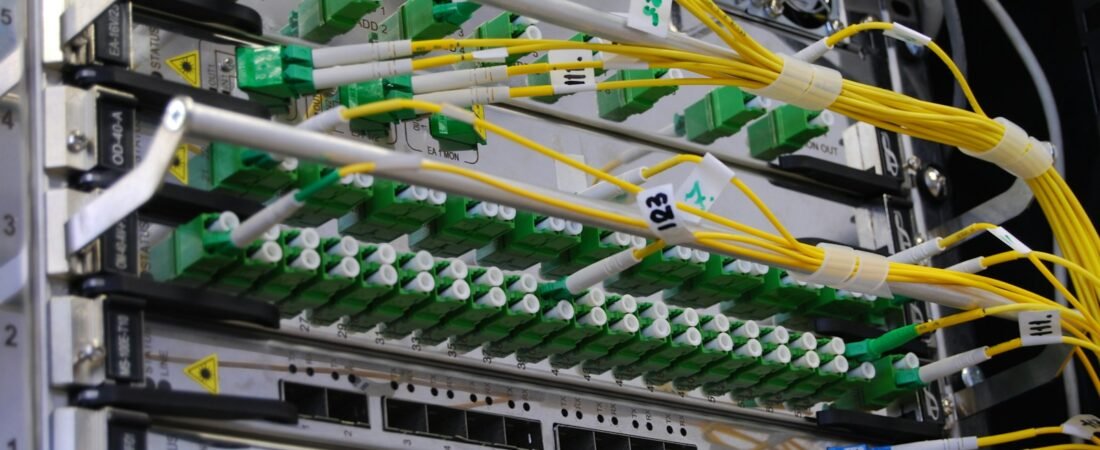
Photo by Kirill Sh on Unsplash
“South Korea has the fastest internet in the world” is one of those facts that travel guides and expat forums keep repeating. Ask about South Korea internet speed today and you will still hear it. The claim was true once, by one measure. By the measure most people cite now, it is not, and the reason it stopped being true is more interesting than the ranking itself.
I expected Korea near the top when I pulled the August 2026 figures for this post. Twenty-sixth for home broadband was not the number I thought I would be writing about.
Where the “fastest internet” claim came from
For most of the 2010s, the figure behind the claim came from Akamai, the content delivery company, which published a quarterly State of the Internet connectivity report. Akamai measured the average speed of real connections to its own servers, country by country, and Korea sat at or near the top for years.
The first-quarter 2017 edition, released on May 31, 2017, is typical of what people were quoting:
| Akamai, Q1 2017 | Average connection speed |
|---|---|
| South Korea (ranked 1st) | 28.6 Mbps |
| Global average | 7.2 Mbps |
Nearly four times the global average. That gap is where the reputation comes from, and it was earned. I could not find a later Akamai country ranking to compare it with, which is part of why a nine-year-old number is still doing so much work.
What the South Korea internet speed numbers say in 2026
The ranking most people see today is Ookla’s Speedtest Global Index, built from speed tests that users run themselves and ranked by the median result in each country. Here is where Korea stood in the August 2026 edition:
| August 2026 median | South Korea | Global median | No. 1 |
|---|---|---|---|
| Mobile download | 378.31 Mbps (4th) | 202.21 Mbps | UAE, 763.70 Mbps |
| Fixed broadband download | 317.89 Mbps (26th) | 256.16 Mbps | Singapore, 652.88 Mbps |
| Fixed broadband upload | 282.71 Mbps | 162.05 Mbps | |
| Fixed broadband latency | 13 ms | 17 ms |
So the mobile half of the reputation holds up. Fourth in the world, behind three Gulf states, is an excellent result for a country of 51 million. Home broadband is the part that has slipped: Korea is above the global median, but Singapore’s median download is roughly double Korea’s, and France, Japan and the United States all sit higher in the same table.

Photo by Clark Gu on Unsplash
Why Korea is no longer on top for home broadband
The short version is that Korea was early and everyone else caught up. Korea wired apartment blocks with fibre years before most of Europe or North America, which is exactly what the Akamai numbers captured. Countries that started later went straight to newer multi-gigabit plans, and a ranking of median speed tests rewards whoever sells the fastest plan to the typical household today, not whoever finished building first.
A median also hides the top end. Korean carriers sell very fast plans, but the median reflects what the typical household chose. If most people are happy on a plan that already streams 4K on every screen in the flat, there is little reason to pay for more, and the median stays where it is.
That is my reading of the numbers rather than something Ookla states, and I would treat it as a partial explanation. Pricing, plan mix and how often people bother to run a speed test all feed into a median.
What Korea still leads on
Look past the headline download figure and the infrastructure story is still strong. The OECD’s October 2025 broadband release put fibre at 90.5% of Korea’s fixed broadband subscriptions at the end of 2024. The OECD average was 47%. Only Iceland was higher.
Fibre shows up in the Ookla numbers too, just not in the column people quote. Korea’s median upload of 282.71 Mbps is close to its download speed, which is what you get from fibre and rarely from cable. Its latency of 13 ms beats the global median. For video calls and big uploads, those two numbers matter more than the difference between 317 and 650 Mbps down.
This is a pattern I keep running into with Korea’s tech statistics. A striking number gets repeated long after the conditions behind it changed, the way Korea’s battery market share can be 37% or 12% depending on which market you count, or how robot density measures something narrower than it sounds.

Photo by Alisa Danyuk on Unsplash
What this means if you are visiting or moving to Korea
For a visitor, almost nothing changes. Mobile data in Korea is fast by any global standard, and a local SIM or eSIM will outrun what most travellers have at home. Free Wi-Fi in subway stations and cafes is common, although public Wi-Fi is always slower than the national medians above.
If you are moving there, expect home fibre that is fast, cheap to install and symmetric enough that uploads will not hold you back. You probably will not get the fastest plan in the world by default, and you will not notice. A household would need several people downloading huge files at once to feel the difference between Korea’s median and Singapore’s.
An accurate version of the old line would be: Korea has some of the best internet infrastructure in the world and a top-five mobile network. It no longer has the fastest home internet, and it has not been clearly first by the most-cited ranking for some time.
❓ FAQ: Frequently Asked Questions
Which country has the fastest internet in 2026?
In Ookla’s August 2026 index, Singapore led fixed broadband with a median download of 652.88 Mbps, and the United Arab Emirates led mobile at 763.70 Mbps.
What is the average internet speed in South Korea?
Ookla’s August 2026 medians were 317.89 Mbps download and 282.71 Mbps upload for fixed broadband, and 378.31 Mbps download on mobile. Medians are what the typical test shows, not the fastest plan available.
Why do some articles still say Korea is number one?
Most of them trace back to Akamai’s connectivity reports from the 2010s, which did rank Korea first. Some newer articles also quote Korea’s mobile ranking, which is still near the top.
Is Korean internet good for gaming?
Yes. Low latency and near-symmetric fibre matter more for gaming than peak download speed, and Korea does well on both.
Ookla figures are from the Speedtest Global Index country tables for August 2026, checked in September 2026. Rankings change monthly. OECD fibre and 5G shares are end-2024 data from the OECD release of 30 October 2025. The explanation for Korea’s fixed-broadband ranking is my own interpretation of these figures, not a finding published by Ookla or the OECD.