
Photo by Sasun Bughdaryan on Unsplash
A country of about 51 million people runs one of the largest single pools of investment capital on earth. Korea’s National Pension Service reported 1,848.7 trillion won under management at the end of May 2026, which is roughly $1.3 trillion depending on the day’s exchange rate.
Most people outside Korea have never heard of it, and quite a few of them own shares alongside it without knowing. How a fund gets that large, and the arithmetic problem waiting underneath, is a story about demographics rather than about investing skill.
How a Pension Fund Gets This Big
Three conditions have to line up, and Korea had all three at once.
A single national scheme. Where other countries spread retirement savings across hundreds of employer plans and private providers, Korea’s is one fund. Scale that would be fragmented elsewhere is concentrated here.
A young workforce paying in. The scheme was established in 1988 into a population that was young and rapidly getting richer. For decades, contributions vastly exceeded payouts, and the surplus was invested.
Time. Nearly four decades of that surplus compounding.
A fund this size cannot invest domestically without becoming the market.
Where the Money Actually Sits
A fund this size cannot invest domestically without becoming the market. Korea’s listed equity market is not large enough to absorb it, so the money goes abroad, and the fund’s allocation has been shifting further that way over time.
That has a consequence worth sitting with: a meaningful slice of it is invested in American and European listed companies. If you hold a global index fund, Korean pension contributions are invested next to yours in many of the same names.
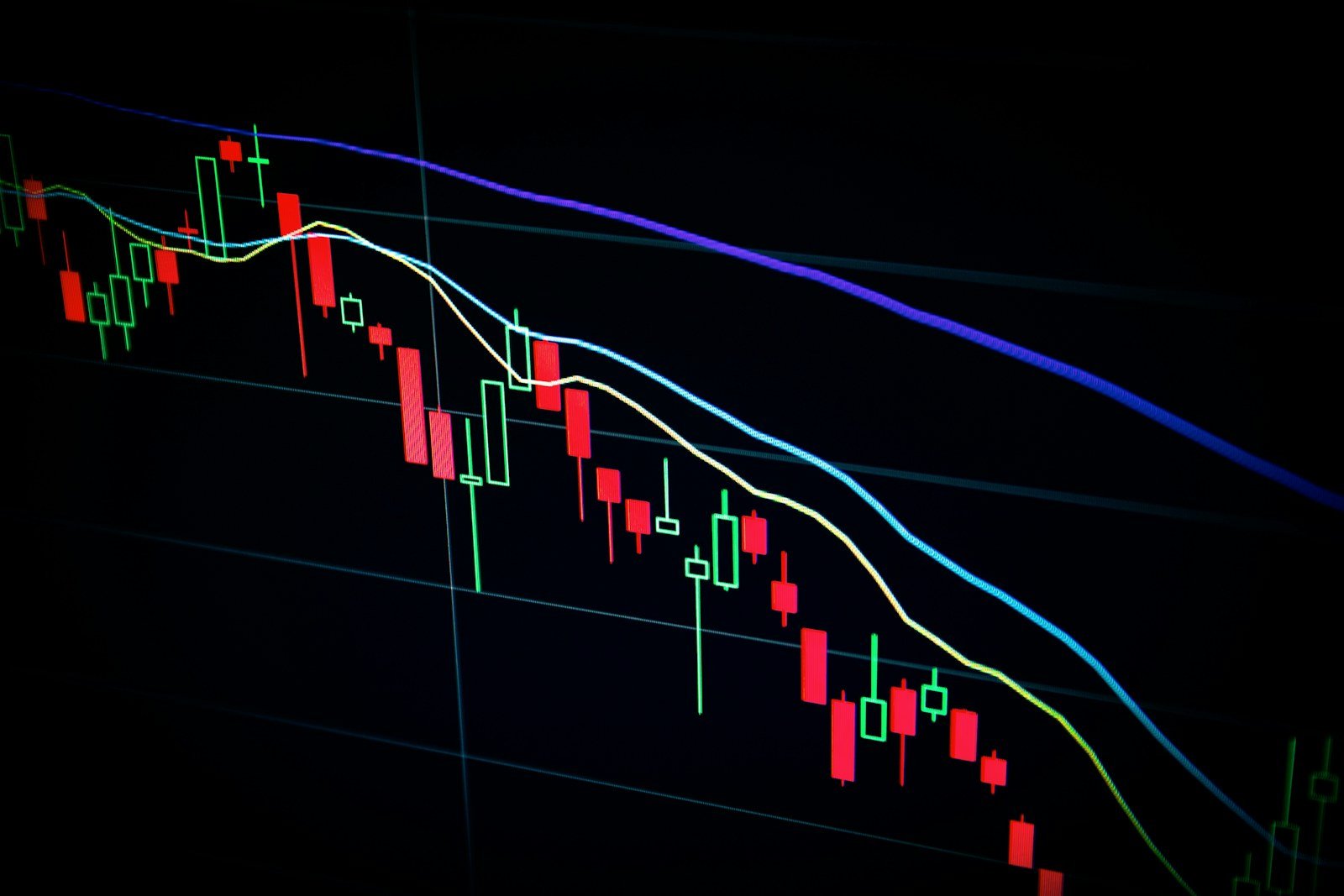
Photo by Maxim Hopman on Unsplash
The Arithmetic Problem
Korea’s fertility rate is among the lowest ever recorded in a peacetime economy. A pension scheme is, mechanically, a transfer from people working to people retired, with the fund acting as a buffer between the two.
When the working population shrinks and the retired population grows, the buffer starts being drawn down rather than added to. The fund stops being a growing pile and becomes a depleting one, and the date at which that turns is a live political question in Korea rather than a distant projection.
| Phase | What happens to the fund |
|---|---|
| Contributions exceed payouts | Fund grows; surplus is invested |
| Contributions roughly equal payouts | Fund plateaus; returns carry it |
| Payouts exceed contributions | Assets are sold to meet obligations |
The Options, None of Them Comfortable
Every country facing this has the same short list, and Korea is debating all of it openly.
- Raise contributions. Falls on a working generation that is already smaller.
- Reduce benefits. Falls on people who paid in expecting a different number.
- Raise the retirement age. Politically fraught everywhere it has been tried.
- Take more investment risk. Raises expected returns and raises the chance of a bad decade at the wrong moment.
The fourth is the one that gets reached for first because it does not require asking anyone to accept less, which is precisely why it deserves scrutiny. Higher expected returns are not a substitute for the arithmetic; they widen the range of outcomes around it.
Photo by JIWON KANG on Unsplash
Higher expected returns are not a substitute for the arithmetic. They widen the range of outcomes around it.
Why This Is Worth Knowing Outside Korea
Korea is not unusual in facing this. It is unusual in facing it early, at scale, with a single fund whose numbers are published monthly. Japan is ahead of it, much of Europe is behind it, and China is behind that.
What Korea decides over the next few years is a live experiment in how an advanced economy handles a pension system designed for a demographic structure that no longer exists. The mechanism is the same one shrinking the manufacturing workforce, which shows up in Korea’s robot density, and it is the same pressure behind a great deal of its technology policy.
Roughly where the comparable systems are
This is a sequencing problem more than a national one, and countries are simply at different points on the same curve.
| Position on the curve | What that phase looks like |
|---|---|
| Already drawing down | Reform is not theoretical. Benefit levels, retirement ages and contribution rates are all live political questions |
| At or near the turn | Where Korea sits. The fund is enormous and the direction of the flow is about to change |
| Still accumulating | Much of Europe and, further back, China. The arithmetic is visible in the projections and easy to defer |
What It Means for Your Own Planning
Not much directly, and one thing indirectly. State pension schemes almost everywhere are subject to the same demographic arithmetic, which is an argument for treating any state provision as a floor rather than a plan.
The mechanics of building your own layer on top of that are covered in Personal Finance Basics.
FAQ: Frequently Asked Questions
How big is Korea’s National Pension Service?
It reported 1,848.7 trillion won under management at the end of May 2026, placing it among the largest pension funds in the world.
Does it invest outside Korea?
Substantially, and increasingly so. The domestic market is too small to absorb a fund of this size without distorting it, so a large share is invested in overseas assets.
Is the fund running out of money?
Not now. The concern is the point at which payouts exceed contributions and the fund begins selling assets rather than buying. When that arrives depends on demographics and on reform decisions still being debated.
Why should anyone outside Korea care?
Because a fund this large shifting from net buyer to net seller affects global asset markets, and because the demographic problem driving it is arriving in many other countries a decade or two later.
General information, not investment advice, and I am not a financial professional. The fund figure is taken from the National Pension Service’s own reporting for end-May 2026 and changes monthly. Reform proposals described here are under debate and may not be adopted.